
NEWS
IN BRIEF
In the field of elections, African countries have generally […]
SHARE
In the field of elections, African countries have generally relied heavily on external partners to fund civic education, citizen observation, voter education and mobilisation, and broader democratic reforms.
So, when seismic changes to the funding landscape arose earlier in 2025 due to the cessation of USAID funding, and with it, programming, the democracy-building field and electoral observation sectors suffered a significant blow. USAID, historically one of the world’s most essential and influential funders of democratic governance, was a drastic loss to the development sector, which had been in gradual decline for years.
The US Government, while bearing much of the blame for substantial aid cuts because of the $60 billion impact caused by the closure of USAID, was joining several other countries, including Canada, the United Kingdom, the Dutch, Swiss, Germans, Belgians, Finns, French, Italians, Swedes, and even the European Union, each of whom had reduced their development aid budgets by amounts ranging from $200 million to $2 billion.
No doubt the funding squeeze poses serious risks to life, as shown in the International Council of Voluntary Agencies (ICVA) report Lives on the Line: The Human Impact of US Foreign Aid Shifts, which describes how critical humanitarian and development services in multiple countries have been halted or dramatically reduced. It also threatens the sustainability of citizen observer groups, civil society advocacy, electoral integrity initiatives, and reform processes in Africa, as several research outputs show. For instance:
- The International Foundation for Electoral Systems reported that 84 per cent of organisations surveyed in 2025 lost funding, with only 5 per cent of new funding received offsetting the losses. 36% of these organisations expressed little or no confidence that they would be able to maintain current levels of activity over the next two to three years, indicating that the disruptions are likely to be long-term and transformative for the sector.
- The Global Democracy Coalition’s report, When Aid Fades: Impacts and Pathways for the Global Democracy Ecosystem, shows that the aid freeze has weakened election assistance, civic organising, accountability reforms, and governance Programmes across several regions.
- The Accountability Lab, Humentum, and the Global Voices Coalition’s Global Aid Freeze initiative have documented widespread uncertainty across the sector, with organisations reporting suspended projects, increased operational pressures, and a pervasive fear of closure. It highlights that 54% of organisations had a financial runway of six months or less, 62% laid off staff, and 68% have not received the termination costs they were promised, leaving many exposed to legal and operational vulnerabilities.
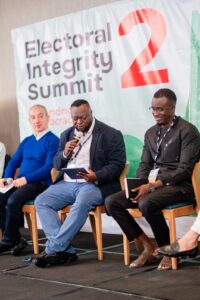
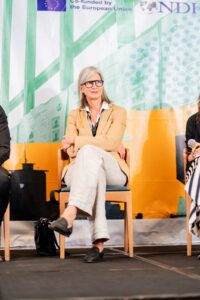
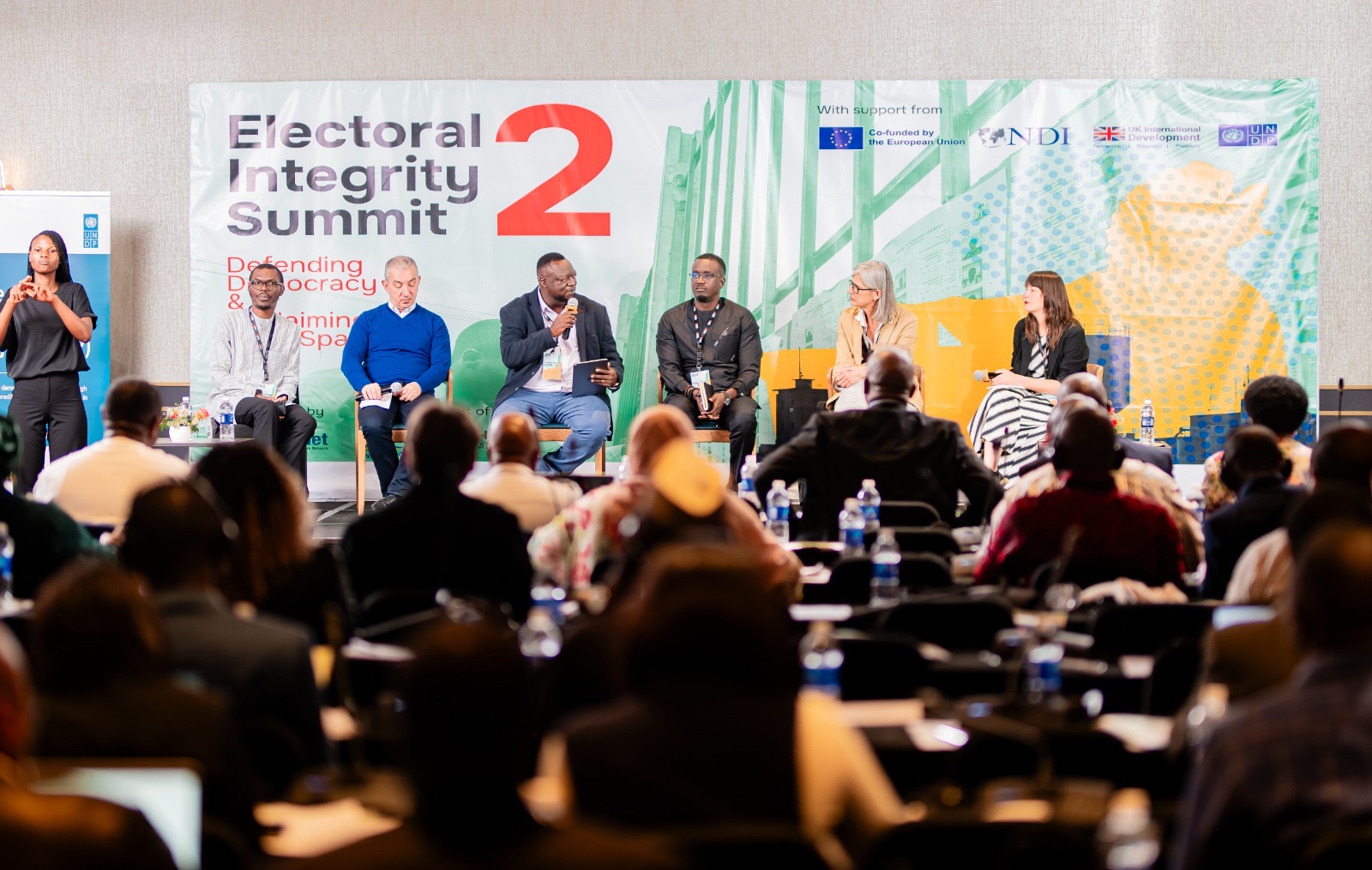
On 11 and 12 November 2025, Accountability Lab East and Southern Africa (ALESA) participated in the second Electoral Integrity Summit in Zambia, held under the theme “Defending Democracy and Reclaiming Civic Space.” ALESA joined other election experts, civil society leaders, policymakers, and regional actors to reflect on the increasing threats to electoral integrity and explore new ways to strengthen Africa’s democratic resilience, reconsider models of democracy financing, evaluate opportunities in the current funding landscape, unpack the implications of diminishing global support, and explore bold alternatives to prevent electoral integrity, civic space, and democratic governance from collapsing due to resource constraints.
ALESA Team Leader, Dr McDonald Lewanika, moderated a panel on “Rethinking financing democracy in an era of shifting global support.” The panel featured sharp analysis and practical solutions from Julia Brothers of the National Democratic Institute (NDI), Malick Fall of the Open Society Foundations (OSF), Robert Gerenge of UNDP Africa, Stefanie Schiffer of the European Platform for Democratic Elections (EPDE), and Miguel Orlando Mendes de Brito of International IDEA.
The panel highlighted several structural trends impacting the ecosystem, including the following:
- The growing centralisation of donor funding, which now benefits large, well-established organisations based in capital cities, marginalises smaller, rural, and grassroots civil society groups, thus weakening local activism. Consequently, many civil society organisations, caught up in the demands of rigid donor compliance systems, have shifted from activist roles to project-management units, prioritising grant delivery over political transformation.
How the limited availability of external funding has forced organisations to begin exploring alternative funding models, including internal fundraising, private-sector partnerships, diaspora engagement, and community-driven financial mobilisation.
The rise of youth-led civic mobilisation. Gen Z movements across Africa are demonstrating an ability to operate outside traditional funding structures, organising organically and effectively without formal grants. These new forms of mobilisation challenge long-held assumptions about the cost of democratic engagement and highlight the importance of volunteerism and civic agency.
The urgent need to deliberately rethink how democracy support is financed, coordinated, and evaluated. The session discussed the need and the practical challenges around diversifying funding bases. Traditional Donors were encouraged to decentralize funding and make it more accessible to smaller and rural organisations, ensuring that capital-based institutions do not monopolise democratic activism and its support.
– The need for stronger coordination, shared platforms, and collective advocacy to reduce duplication and increase influence, particularly in national policy discussions about public financing and governance reforms. In these spaces, civil society is often absent.
- Innovation in election observation emerged as a critical area for transformation. With shrinking budgets, traditional, resource-intensive observation missions are no longer sustainable. The sector was encouraged to embrace technology, consolidate observation platforms, and combine professional observers with trained youth volunteers to make observation more efficient and scalable.
- Deeper private-sector engagement. Many businesses and high-net-worth individuals already contribute to social causes, but rarely work on democracy or governance. Panellists suggested reframing democratic stability as essential to economic growth and investor confidence, thereby attracting the private sector and the support of the estimated 22 Billionaires and over 350 centi-millionaires on the African continent today.
- The importance of improving how democratic outcomes are measured and communicated. More substantial evidence of impact is essential to demonstrate the value of democracy assistance and sustain donor interest. Coordinated advocacy, particularly toward influential actors such as the European Union and the US government, will be vital to ensuring that democracy support remains a global priority.
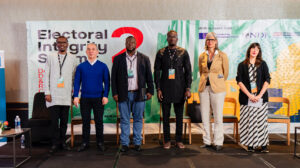
The 2025 Electoral Integrity Summit illuminated a sector standing at a crossroads. As democratic institutions continue to face shrinking civic spaces, the organisations traditionally responsible for defending democracy are themselves under immense strain.
The path forward will require innovation, strategic adaptation, and a renewed commitment to centering citizen agency, primarily through youth-driven and community-led models that demonstrate resilience even in the face of limited resources.
– By Bathabile Dlamini | Media and Communications Officer